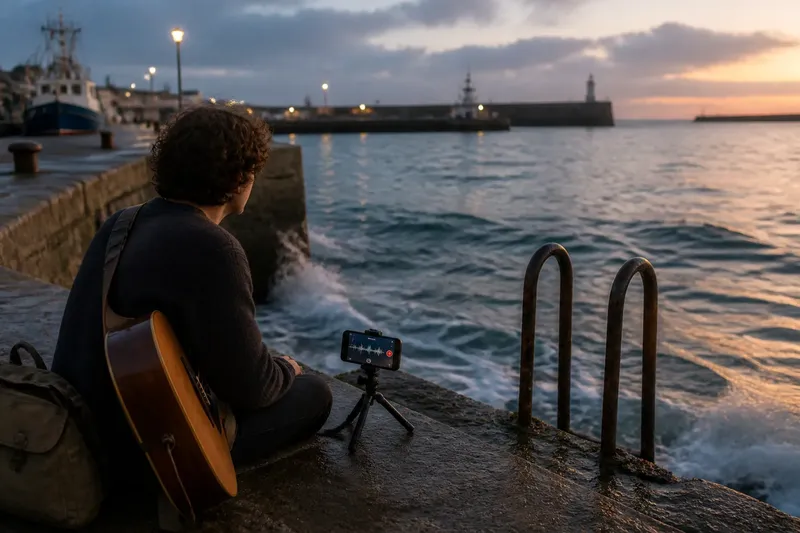
A Listening Walk for a Windy Afternoon
A coastal listening walk helps you notice shifting wind, surf, birds and harbour sounds with a simple, no-equipment routine for a windy afternoon.
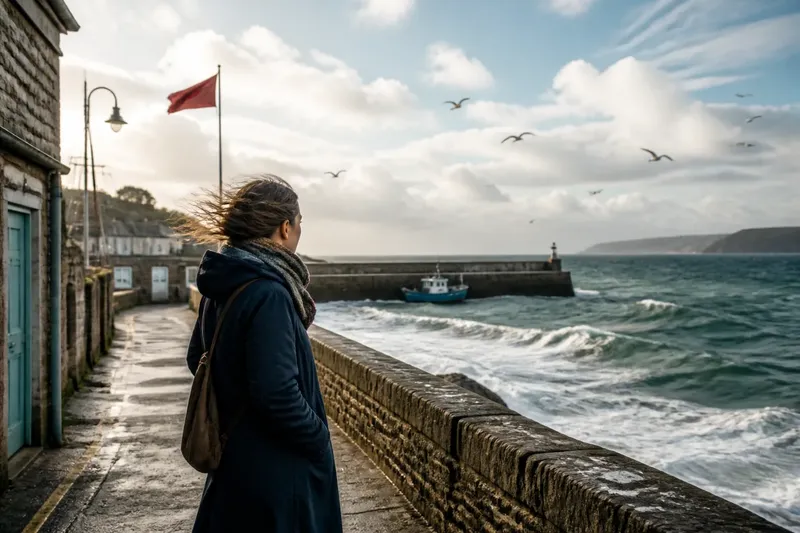
A listening walk on a windy afternoon can begin at the promenade, where the wind presses your coat against your arm and a loose flag snaps above the railings. Give yourself a short route and one task: notice which sounds come forward as you move, and which retreat. You need no headphones, recording device or musical knowledge—just a little time and a place where you can pause comfortably.
Choose a route with changing sound
Pick a familiar stretch that offers a few different listening positions: perhaps a sheltered lane, an open seafront path and a spot near a harbour wall. The point is not to cover ground but to hear how the same afternoon changes from one edge of the coast to another. A route you already know makes it easier to attend to sound rather than directions.
Keep the outing modest. A loop that takes less time than a full afternoon walk leaves room to linger without turning listening into a task to complete. Choose public paths and places where standing aside will not obstruct others. If the wind makes conversation difficult, let that be a cue to pause in a more sheltered place rather than strain to catch every detail.
Begin with the broadest layer
At your first stopping place, listen without naming individual sounds straight away. Notice the overall texture: a steady wash, scattered bursts, a low rumble, or a patchwork of interruptions. Then attend to one broad source at a time—the wind moving across buildings, surf reaching the shore, or traffic passing inland.
Try listening with your body still and your gaze relaxed. Wind can make sound seem to arrive from several directions at once, while a wall or row of buildings may soften some parts of the scene. You do not need to decide exactly where every sound comes from. It is enough to notice whether it feels close, distant, continuous or intermittent.
Let each stop pose a different question
Use a simple rhythm for the walk: pause, listen, move on, then pause again. At the next stop, shift your attention rather than searching for a more impressive sound. The same surf may blur into a low hiss from one position and break into distinct pulses from another; nearby footsteps or gull calls can alter what you notice.
- At a sheltered edge: Listen for sounds that were masked in the open, such as voices, rigging, leaves or the clatter of a door.
- In an open stretch: Notice how gusts change the loudness and shape of distant surf or traffic.
- Near working water: Attend to the rhythm of activity—engines, ropes, footsteps or a vessel moving—without trying to turn it into a tune.
- On the return: Listen for a sound you recognise, then check whether it seems different from your first pass.
Say you start beside a sheltered harbour lane and hear a halyard tapping against a mast. As you walk out to the exposed promenade, imagine the gusts masking that tap; on the return, you expect to hear it again when the wall blocks some of the wind. The useful observation is not whether the sound has changed in itself, but how your position changes what reaches your attention.
What should you listen for as the wind shifts?
How can I tell wind noise from surf?
Listen for the way the sound begins and fades. Surf often arrives in uneven swells, while wind may rise across a broader stretch of time, though both can overlap and blur together.
Should I try to identify every bird call?
No. Notice whether a call is sharp or soft, solitary or repeated, and whether it comes from above, the shore or a cluster of buildings. Identification can wait; careful listening does not depend on naming the bird.
What if the coast sounds quiet?
Stay for a moment and listen for small changes: water touching stones, a flag shifting, or distant movement. Quiet is not an empty scene; it may simply have fewer sounds competing for attention.
How do I keep the walk from feeling like a performance?
Do not count sounds, record them or try to make a pattern from them. Let the weather and place set the pace, and move on when you are ready rather than waiting for a dramatic moment.
Use the return walk to notice change
On the way back, revisit one or two stopping places. Check what has become more noticeable: perhaps a wind direction has shifted, a passing vehicle has gone, or your ears have adjusted to a sound that seemed faint earlier. You are not looking for a neat beginning and ending. The point is to register that a coastal soundscape is made of sources that overlap, recede and return on different timescales.
If you want to remember the walk, keep one plain sentence in mind or jot it down afterwards: “The open path blurred the harbour sounds, but the lane brought back the tapping.” A short observation is often more useful than a long inventory, because it records a relationship between place and sound rather than treating each noise as a separate item.
Leave the soundscape as you found it
There is no need to add music, speak over the quieter moments or seek out a particular sound. The walk is a chance to pay attention, not to improve the place or turn it into a performance. It is also not worth chasing a distant noise along an unfamiliar route; stay with accessible public paths and choose a comfortable place to pause.
A listening walk works best when it can be repeated without becoming a project. Take the same route on another windy afternoon and notice one fresh change, such as how a sheltered corner alters the balance between surf and human activity. That small comparison is enough to make the coastline feel newly particular without asking it to provide a soundtrack.